
dev.Bio4Energy

  • Research
    • Platforms
    • Strategic Funds & Projects
    • Publications
  • Context
    • Global Challenges
    • Biomass Resources
    • Biorefineries
  • Education
    • Bio4Energy Graduate School
    • PhD Projects
    • Alumni
    • Undergraduate Education
  • Collaboration
    • Research Collaboration
    • Bio4Energy Advisory Board
  • About Us
    • Bio4Energy — A Strategic Research Environment
    • Contact
    • Open Positions
    • Download Materials
  • News & Events
    • Bio4Energy Calendar
    • Newsletters
  • Click to open the search input field Click to open the search input field Search
  • Menu Menu
Home1 / Projects2 / Utilising the natural composition of industrial bio-based residues for...
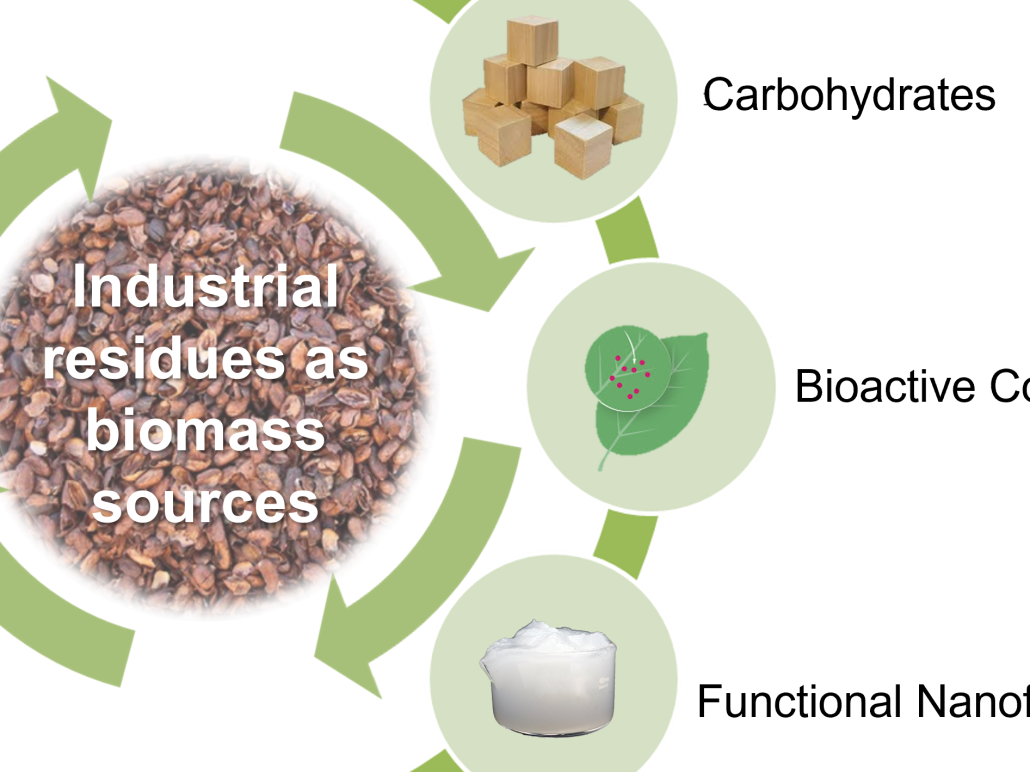
Illustration of industrial residues as a source of biomass, by courtesy of Linn Berglund.Courtesy Linn Berglund, Bio4Energy

Utilising the natural composition of industrial bio-based residues for efficient separation of functional nanofibers

28 April, 2022/in Past Strategic Projects/by Anna Strom

Project leader: Linn Berglund, linn.berglund@ltu.se 

Other participants: Io Antonopoulou, Carlos Martín, Ola Sundman, Shaojun Xiong

Platforms: BioPolChem, FeedPro

Organisations: LTU, UmU, SLU

Status: Completed

Reference: B4E3-TM-1-03

Call: B4E3-TM-1, 2021

The main aim of this project was to separate functional nanofibers from bio-based residues by utilizing their natural composition for increased resource efficiency combined with the development of nanofibers with specific functionality. Within a biorefinery perspective, exploiting cellulosic biomass, from industrial residues is advantageous both from an environmental and economic point of view. This applies to the entire chain of resources, from sustainable use of raw materials to the reduction of residues by means of waste treatment or disposal and furthermore to the development of high value-added products.

Residues from food industry were evaluated for nanofiber production potential targeting high yield and efficient processing. A commercial birch kraft pulp was used as a reference material in this project, since nanofiber production is today most commonly done from wood pulp. Overall, the bio-residues could be successfully processed into functional nanofibers with at a lower energy demand compared to the reference material.

The nanofibers have potential uses in applications such as packaging and biomedical, and/or as reinforcements in bionanocomposites. The project has demonstrated how nanofibers with specific functionality can be sustainably produced from industrial bio-residues and thereby contribute to added-value of these residues, as well as promote resource-efficiency described as a global goal for a more sustainable development in Agenda 2030.

Keywords: natural resources; bio-residues; efficient processing; nanocellulose; sustainability

https://dev.bio4energy.se/wp-content/uploads/2022/04/FunctionalNanofibres_LinnBerglund-e1656682520948.png 1418 1893 Anna Strom https://dev.bio4energy.se/wp-content/uploads/2022/08/Logo_stor_farg-300x74.png Anna Strom2022-04-28 16:21:232022-09-26 14:06:49Utilising the natural composition of industrial bio-based residues for efficient separation of functional nanofibers

Latest news

  • Researchers Jonas Hedlund and Sofie Zätterqvist have won Luleå University of Technology's award Innovator of the Year 2022.LTU
    Innovation Award for R&D on Biogas Separation Technology to Bio4Energy Researcher15 November, 2022 - 16:34
  • Bio4Energy scientists have won funds for three multi-annual research projects, from the Swedish Research Council. Photo by Anna Strom ©2022 (Archives).©AnnaStrom
    Plastic Waste, Carbon Nano Materials, Photothermal Imaging in New Research Projects8 November, 2022 - 17:30
  • Naser Tavajohi shows a module for an artificial membrane, at one of his research laboratories at Umeå University, Sweden. Photo by Anna Strom ©2022.©AnnaStrom
    Young Researcher Wins Prize for Development of Sustainable Artificial Membranes20 October, 2022 - 15:42

VISITING ADDRESS

Umeå University Campus Map

LinkedIn

ADDRESS

Bio4Energy

Umeå University

SE-90187 UMEÅ

Sweden

LOG IN

Link to: Increasing the use of renewable energy carriers in Swedish mineral processing industries Link to: Increasing the use of renewable energy carriers in Swedish mineral processing industries Increasing the use of renewable energy carriers in Swedish mineral processing... Link to: Bio-methanol to jetfuel Link to: Bio-methanol to jetfuel An aircraft parked at Stockholm Arlanda, Sweden. Photo by Anna Strom ©2022.©AnnaStromBio-methanol to jetfuel
Scroll to top Scroll to top Scroll to top