
dev.Bio4Energy

  • Research
    • Platforms
    • Strategic Funds & Projects
    • Publications
  • Context
    • Global Challenges
    • Biomass Resources
    • Biorefineries
  • Education
    • Bio4Energy Graduate School
    • PhD Projects
    • Alumni
    • Undergraduate Education
  • Collaboration
    • Research Collaboration
    • Bio4Energy Advisory Board
  • About Us
    • Bio4Energy — A Strategic Research Environment
    • Contact
    • Open Positions
    • Download Materials
  • News & Events
    • Bio4Energy Calendar
    • Newsletters
  • Click to open the search input field Click to open the search input field Search
  • Menu Menu
Home1 / News2 / RISE to Invest SEK350 Million in Its Biorefinery Test Bed Environments
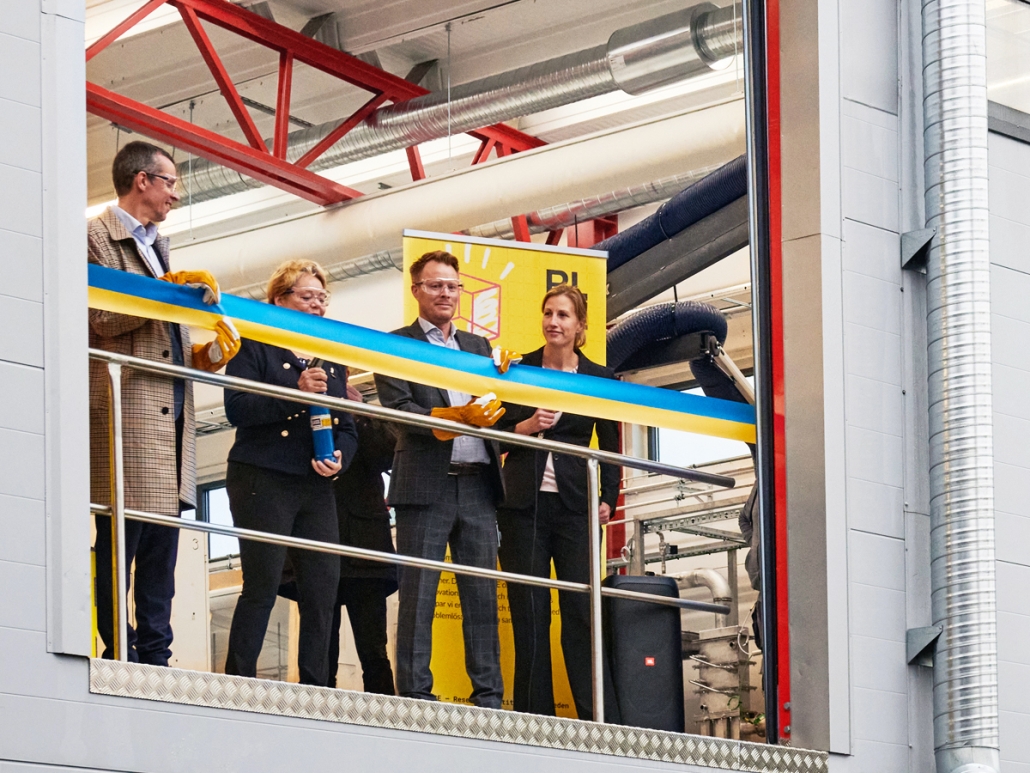
RISE Research Institutes of Sweden inaugurate the expansion of it test-bed environments for biorefinery. Photo by Maria Fäldt.RISE

RISE to Invest SEK350 Million in Its Biorefinery Test Bed Environments

22 September, 2022/in News/by Anna Strom

Bio4Energy partner RISE Research Institutes of Sweden have committed to an investment of SEK350 million in the “coming years” to expand their test bed environments at Piteå and elsewhere in Sweden. 

“In the coming years, we at RISE will make an additional investment of 350 million kronor to strengthen our range of test beds in biorefinery and establish a world-class centre for upscaling of processes pertaining to a circular bioeconomy”, said Magnus Hallberg, head of division at RISE Bioeconomy and Health, in a press release.

Elisabeth Wetterlund, Bio4Energy deputy programme manager, attended the inauguration ceremony 15 September.

“This [expansion] will open the door to more exciting strategic collaborations between RISE Piteå and several of the Bio4Energy platforms, so that we can develop even further our knowledge about processing and upgrading of different types of residual streams to renewable fuels, materials and chemicals”, according to Wetterlund, professor at Luleå University of Technology.

“The new and expanded ted bed activities at RISE are incredibly important to the development, upscaling and industrialisation of different biorefinery processes—for Bio4Energy and for Sweden at large”, she said. 
Tags: Demonstration, RISE Research Institutes of Sweden, test beds for biorefinery
https://dev.bio4energy.se/wp-content/uploads/2022/09/Invigning_lab-hall_RISE_01_150922-e1663848436582.jpg 900 1200 Anna Strom https://dev.bio4energy.se/wp-content/uploads/2022/08/Logo_stor_farg-300x74.png Anna Strom2022-09-22 11:59:042022-11-15 18:21:58RISE to Invest SEK350 Million in Its Biorefinery Test Bed Environments
You might also like
Bio4Energy ©2022 Quinoa Project Classifies New Building Block for Biorefinery
Starting Soon: Training on Developing Biofuels, Chemicals, Materials

Latest news

  • Researchers Jonas Hedlund and Sofie Zätterqvist have won Luleå University of Technology's award Innovator of the Year 2022.LTU
    Innovation Award for R&D on Biogas Separation Technology to Bio4Energy Researcher15 November, 2022 - 16:34
  • Bio4Energy scientists have won funds for three multi-annual research projects, from the Swedish Research Council. Photo by Anna Strom ©2022 (Archives).©AnnaStrom
    Plastic Waste, Carbon Nano Materials, Photothermal Imaging in New Research Projects8 November, 2022 - 17:30
  • Naser Tavajohi shows a module for an artificial membrane, at one of his research laboratories at Umeå University, Sweden. Photo by Anna Strom ©2022.©AnnaStrom
    Young Researcher Wins Prize for Development of Sustainable Artificial Membranes20 October, 2022 - 15:42

VISITING ADDRESS

Umeå University Campus Map

LinkedIn

ADDRESS

Bio4Energy

Umeå University

SE-90187 UMEÅ

Sweden

LOG IN

Link to: IEA: Bioenergy Part of Sustainable Energy Mix Link to: IEA: Bioenergy Part of Sustainable Energy Mix IEA: Bioenergy Part of Sustainable Energy MixTimber logs. Photo by Anna Strom ©2022.©AnnaStrom Link to: Polymer Lignin May Be Modified for Drought Resistance in Plants Link to: Polymer Lignin May Be Modified for Drought Resistance in Plants Scientist Edouard Pesquet and team have discovered a chemical "code" for the plant polymer lignin. Photos by courtesy of Edouard Pesquet and team.Stockholm UniversityPolymer Lignin May Be Modified for Drought Resistance in Plants
Scroll to top Scroll to top Scroll to top