dev.Bio4Energy

  • Research
    • Platforms
    • Strategic Funds & Projects
    • Publications
  • Context
    • Global Challenges
    • Biomass Resources
    • Biorefineries
  • Education
    • Bio4Energy Graduate School
    • PhD Projects
    • Alumni
    • Undergraduate Education
  • Collaboration
    • Research Collaboration
    • Bio4Energy Advisory Board
  • About Us
    • Bio4Energy — A Strategic Research Environment
    • Contact
    • Open Positions
    • Download Materials
  • News & Events
    • Bio4Energy Calendar
    • Newsletters
  • Click to open the search input field Click to open the search input field Search
  • Menu Menu
Home1 / Luleå University of Technology

Tag Archive for: Luleå University of Technology

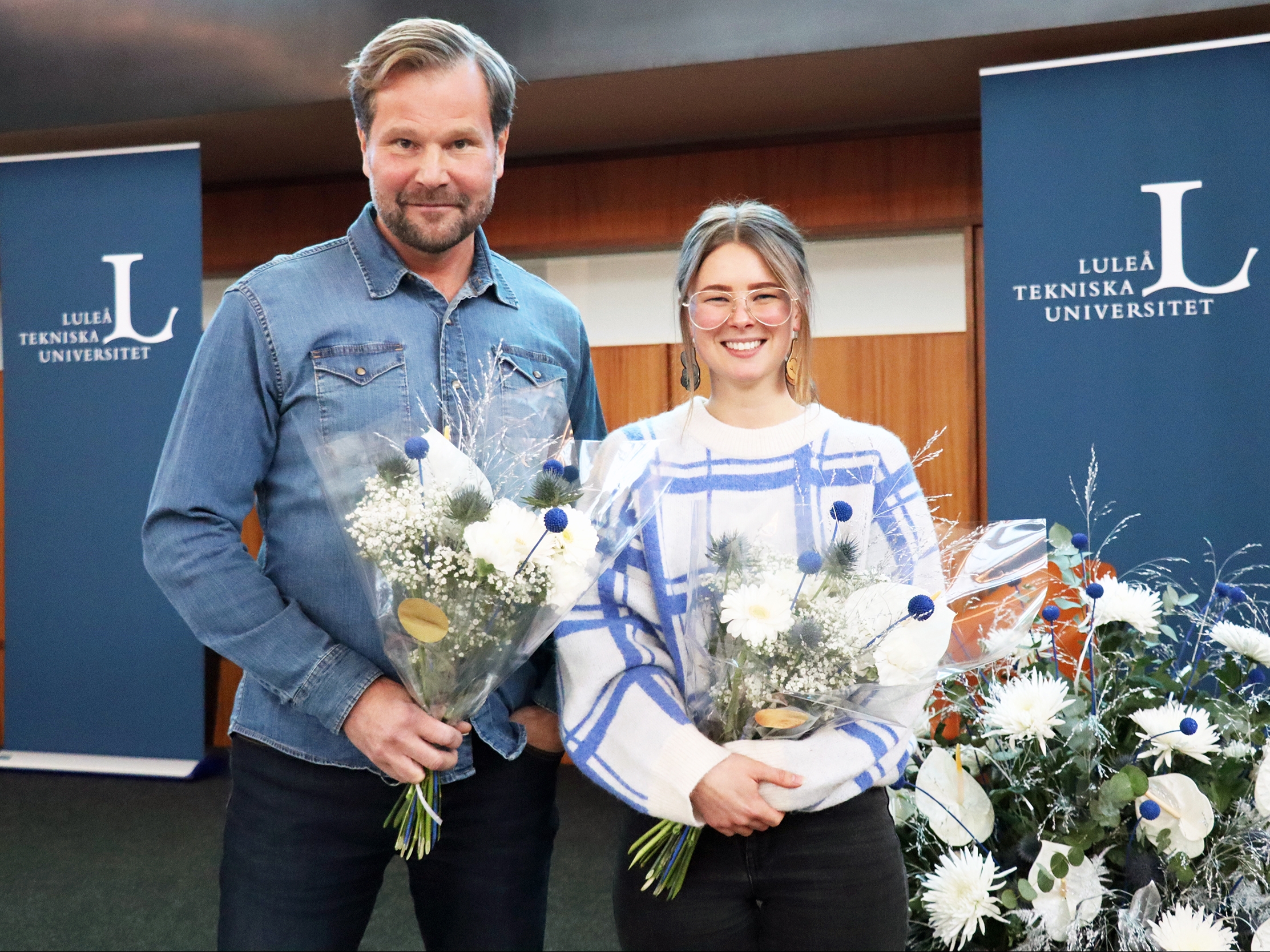
Researchers Jonas Hedlund and Sofie Zätterqvist have won Luleå University of Technology's award Innovator of the Year 2022.LTU

Innovation Award for R&D on Biogas Separation Technology to Bio4Energy Researcher

15 November, 2022/in News/by Anna Strom

A Bio4Energy research leader has been appointed Innovator of the Year by his employer Luleå University of Technology, Sweden, for developing energy-efficient technology for biogas upgrading for use as vehicle fuel.

Professor Jonas Hedlund and his team on Bio4Energy Catalysis and Separation have a long history of developing and perfecting membranes from zeolites. The latter are microporous, crystalline aluminosilicate materials commonly used as commercial adsorbents or catalysts.

Carbon dioxide separation from biogas and saltwater purification are two main avenues for use of the membranes that the researchers are developing. To the best of their knowledge, they were the first team to develop large membranes from Chabazite, a so-called tectosilicate mineral of the zeolite group.

What set the effort apart, is the quality of the membranes developed.

Hedlund’s business venture ZeoMem Sweden is the only one to offer membranes for sale that are selective enough and which provide sufficient throughput for them to be used in industry, according to a press release from LTU.

“Zeolite membrane processes are a new, inexpensive and compact technology, which is approximately 90 per cent more energy efficient the technology in use”, Hedlund said;

“We estimate that these processes could be used in five per cent of separation processes worldwide. This means that the potential for energy savings from [using] new zeolite membrane processes is on a par with the annual consumption of [fossil] oil in Sweden”.

The goal is for the new-style zeolite membranes to be produced at an automated factory at Luleå, for ZeoMem Sweden to be able to provide membranes for purification of natural gas or ethene in large-scale industrial operations.

In its award motivation, LTU called the effort “an important contribution to the green transition and a more sustainable world.

“After more than 20 years of research on zeolite membranes, Jonas Hedlund has developed a unique and scalable solution for the purification of biogas”.

Bio4Energy has world-leading scientists on it research platform for Chemical Catalysis and Separation Technologies. Jonas Hedlund, professor at Luleå University of Technology, has been ranked among the top one per cent of leading scientists in chemical technology in a 2021 review by Stanford University, U.S.A. 
https://dev.bio4energy.se/wp-content/uploads/2022/11/JH-SofieZatterqvist_LTU-e1668529915382.jpg 1668 2225 Anna Strom https://dev.bio4energy.se/wp-content/uploads/2022/08/Logo_stor_farg-300x74.png Anna Strom2022-11-15 16:34:422022-11-25 14:45:27Innovation Award for R&D on Biogas Separation Technology to Bio4Energy Researcher
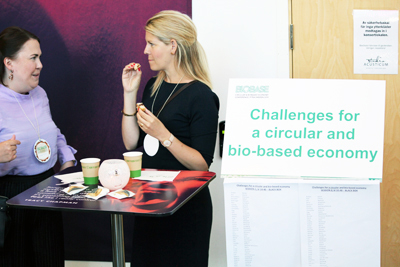
Bio4Energy scientists have won funds for three multi-annual research projects, from the Swedish Research Council. Photo by Anna Strom ©2022 (Archives).©AnnaStrom

Plastic Waste, Carbon Nano Materials, Photothermal Imaging in New Research Projects

8 November, 2022/in News/by Anna Strom

Bio4Energy researchers have won funds from the Swedish Research Council for multi-annual projects on “upcycling” of plastic waste, evaluation of carbon nano materials for use in electrodes and photothermal imaging of fatty acids and droplets.

The projects and their participants are acknowledged as follows:

  • Development of sustainable and efficient processes for upcycling of PET waste into value-added chemicals as building blocks for recyclable materials, Ulrika Rova, Bio4Energy Biochemical Conversion at Luleå University of Technology (LTU). Co-applicants at LTU are Suman Bajracharya, Annie Modestra Jampala and Paul Christakopoulos.
  • Experimental and theoretical evaluation of carbon nano materials with hierarchical porous structures and large surface area for use as sustainable electrodes, Kristiina Oksman, Bio4Energy Biochemical Conversion. Collaboration partners are Staffan Lundström and Andreas Larsson. All are affiliated with LTU.
  • High-speed mid-infrared photothermal imaging of fatty acids and lipid droplets in living cells, Florian Schmidt, Bio4Energy Thermochemical Conversion at Umeå University.
  • Brain cancer, Raman spectroscopy, multimodal guidance, surgery, direct signal analysis and classification, Kerstin Ramser, Bio4Energy Thermochemical Conversion at LTU. Collaboration partners are Karin Wårdell, Jan Hillman, Johan Richter, Martin Hallbeck; all of the University of Linköping; as well as Joel Wahl of LTU.
https://dev.bio4energy.se/wp-content/uploads/2022/11/Challenges_©AnnaStrom.jpg 267 400 Anna Strom https://dev.bio4energy.se/wp-content/uploads/2022/08/Logo_stor_farg-300x74.png Anna Strom2022-11-08 17:30:102022-11-11 15:37:05Plastic Waste, Carbon Nano Materials, Photothermal Imaging in New Research Projects
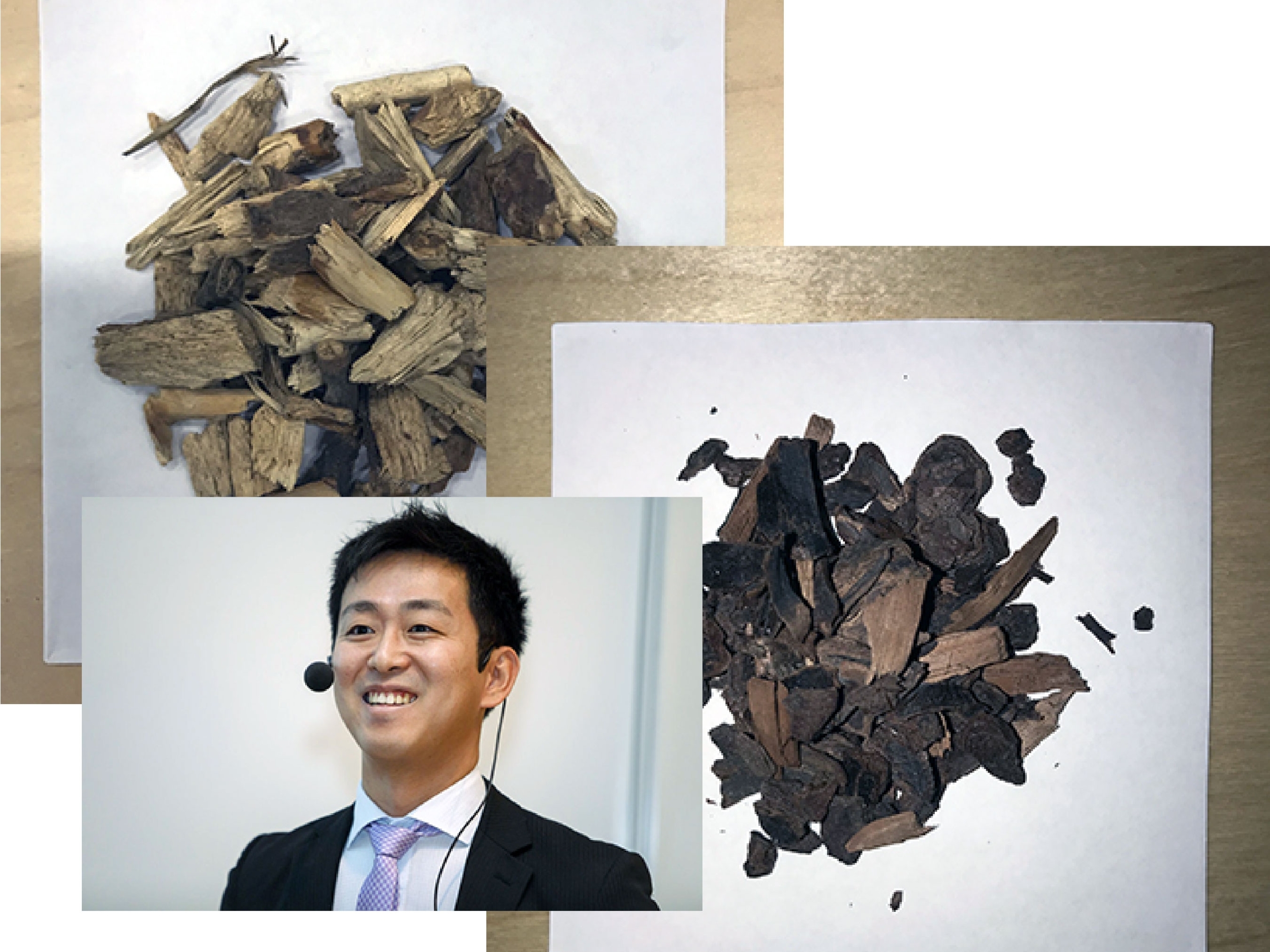
Biomass (left) must be turned into biocarbon (right) in a controlled process to be an alternative for use to fossil coal in the iron and steel industries. Kentaro Umeki is Bio4Energy's man on the job. Photos by courtesy of Kentaro Umeki, Luleå University of Technology.Courtesy Kentaro Umeki. Collage by Anna Strom
Phase Out of Fossil Coal in Sweden’s Iron, Steel Industries on Cards

7 June, 2022/in News/by Anna Strom

A project consortium including research groups, technology development companies, plant owners and iron and steel industry; is about to take a large step toward phasing out the use of fossil coal in the iron and steel industries in Sweden.

Thanks to a substantial grant from the Swedish Energy Agency, the partners will be able to deliver a reactor concept and a roadmap detailing the way in which to implement a switch from fossil coal to biocarbon in existing district-heating plants, using fluidised-bed gasification technology.

Whereas fossilised coal is extracted from the Earth’s interior in mining operations, oftentimes transported over long distances and a potent source of greenhouse gas emissions; biocarbon is high-temperature treated biomass from woody residue or industrial bio-based waste that will be sourced regionally by the partners. 

In fact, when treated at a temperature range of 500 – 900 degrees Celsius, biomass becomes almost pure solid carbon and earns the name “biocarbon”. It is seen as carbon “neutral” under the current regulatory framework and so the expectation is that the new technology will deliver net zero emissions of carbon dioxide, the greenhouse gas. 

Seven-to-nine per cent of global emissions of carbon dioxide hail from iron and steel making operations. In Sweden, where the sector is both an important employer and provider of exports, this figure is 12 per cent.

Bio4Energy’s role in the four-year project is to map out what conditions are needed for biocarbon to be a cost-effective alternative to fossil coal, via modeling and laboratory trials. Notably, the research results will show which biomass properties and mixing behavior inside the reactors are optimal. Professor Kentaro Umeki of Luleå University of Technology will lead these efforts, starting now.

“The reaction [inside the reactor or boiler] has to be precisely controlled for the quality and productivity of the steel to be high”, Umeki said in a conference call with Bio4Energy Communications.

“We have been working for six-seven years to optimise the biocarbon properties and yield”, he added, with reference to other projects, running or concluded.

For all the talk about climate change and fossil fuel phase out, Umeki said, there was an important point that tended to be overlooked in the societal debate.

“It is extremely important to know that carbon is still needed as the transition happens. Almost the only source of renewable carbon is biomass.

“Quite many processes for instance in the petrochemical industry still need carbon, even if you do not see it [as a consumer]. The carbon gotten from biomass is the most cost effective”, he said.

A recent estimate for total biocarbon production needed to replace fossil coal in the sector, put the total to between 200,000 and 300,000 tonnes of biocarbon during the years 2030 – 2045, according to background documentation to the consortium’s grant application.

“At the end of the project, there will be a new reactor concept ready to implement and which will provide the industrial partners with up to 80,000 tonnes per annum of biocarbon and a reduction of CO2 emission of about 290,000 tonnes per year”, it said;

“Thus it becomes clear that the proposed technology can deliver future needs of biocarbon to the iron and steel industries on a national level”.

Consortium partners are: Chalmers University of Technology (lead), Luleå University of Technology, RISE Research Institutes of Sweden, BioShare, E.ON, Höganäs and SSAB.

https://dev.bio4energy.se/wp-content/uploads/2022/06/KU-Biocarbon_Bio4Energy©2022-scaled-e1654616700869.jpg 1920 2560 Anna Strom https://dev.bio4energy.se/wp-content/uploads/2022/08/Logo_stor_farg-300x74.png Anna Strom2022-06-07 15:46:222022-06-07 16:13:29Phase Out of Fossil Coal in Sweden’s Iron, Steel Industries on Cards
Bio4Energy 2022

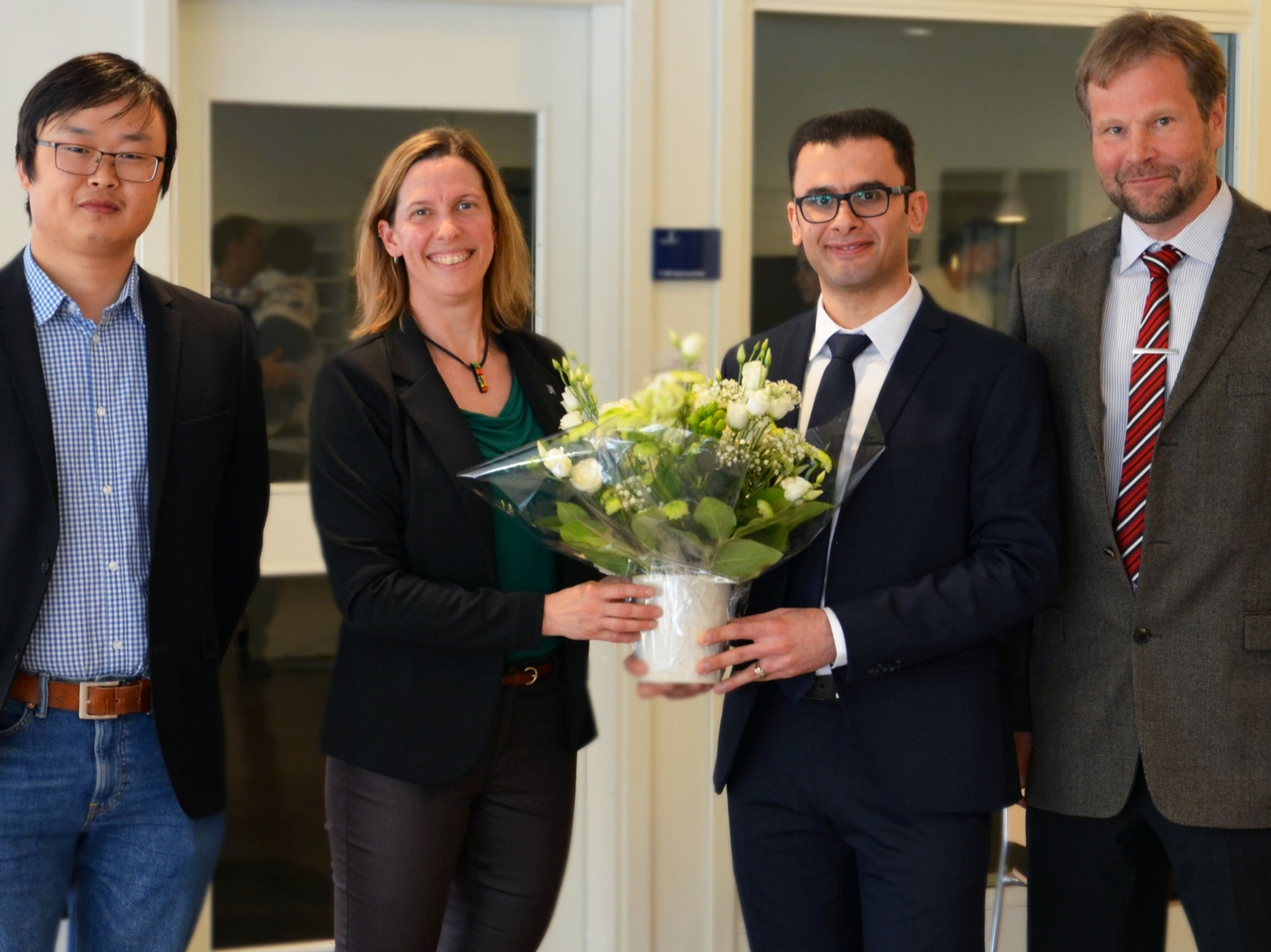
Bio4Energy Celebrates its 100th Thesis Defence by PhD Student

25 April, 2022/in News/by Anna Strom

The Bio4Energy research environment is celebrating its 100th thesis defence by a PhD student.

Mojtaba Nobandegani, Luleå University of Technology (LTU) receives the honour of being the 100th advanced student to pass his doctoral degree as part of the Bio4Energy cluster.

His thesis Adsorption and mass transport in zeolite membranes is part of the research efforts of the platform Bio4Energy Chemical Catalysis and Separation Technologies.

Education and training are a central mission for Bio4Energy, alongside research and development.

The Bio4Energy programme managers and coordinator for education extend their congratulations to Nobandegani and his supervisor professor Jonas Hedlund of LTU.

https://dev.bio4energy.se/wp-content/uploads/2022/04/MojtabaNobandegani_ThesisDef-scaled-e1650983370406.jpg 1529 2041 Anna Strom https://dev.bio4energy.se/wp-content/uploads/2022/08/Logo_stor_farg-300x74.png Anna Strom2022-04-25 15:22:352022-04-26 14:30:50Bio4Energy Celebrates its 100th Thesis Defence by PhD Student

Latest news

  • Researchers Jonas Hedlund and Sofie Zätterqvist have won Luleå University of Technology's award Innovator of the Year 2022.LTU
    Innovation Award for R&D on Biogas Separation Technology to Bio4Energy Researcher15 November, 2022 - 16:34
  • Bio4Energy scientists have won funds for three multi-annual research projects, from the Swedish Research Council. Photo by Anna Strom ©2022 (Archives).©AnnaStrom
    Plastic Waste, Carbon Nano Materials, Photothermal Imaging in New Research Projects8 November, 2022 - 17:30
  • Naser Tavajohi shows a module for an artificial membrane, at one of his research laboratories at Umeå University, Sweden. Photo by Anna Strom ©2022.©AnnaStrom
    Young Researcher Wins Prize for Development of Sustainable Artificial Membranes20 October, 2022 - 15:42

VISITING ADDRESS

Umeå University Campus Map

LinkedIn

ADDRESS

Bio4Energy

Umeå University

SE-90187 UMEÅ

Sweden

LOG IN

Scroll to top Scroll to top Scroll to top